From Sheet Metal to Ready-to-Install
Global Precision Works (GPW) assembles enclosures and cabinets as complete, tested systems — not empty boxes. Component mounting, electrical integration, cable routing, thermal management, and functional validation, all under one roof in Monterrey, Mexico.
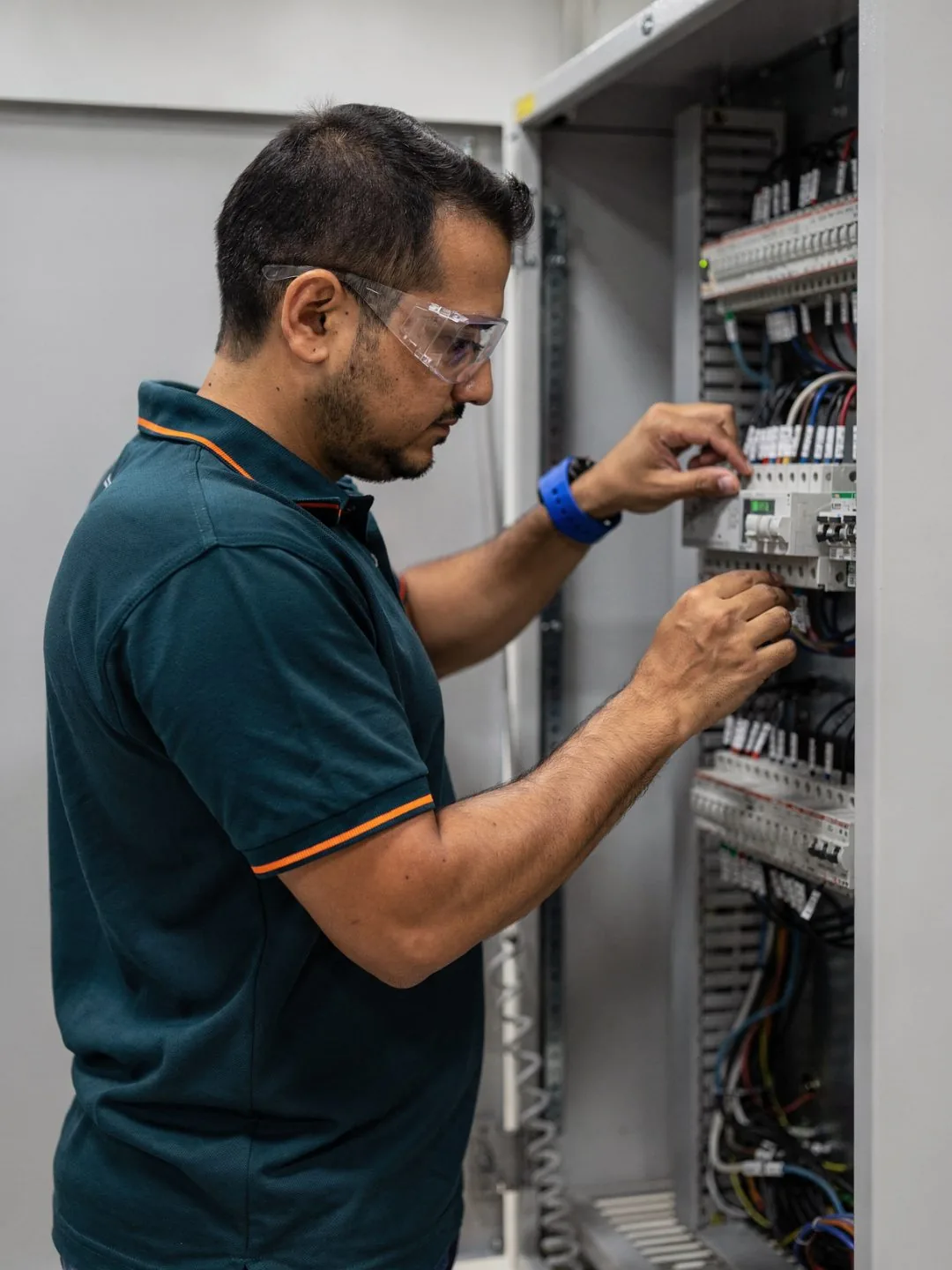
An enclosure is not a product. It is the housing for a product — and the assembly that turns a painted steel box into a functioning system involves dozens of operations that most sheet metal fabricators do not perform. GPW bridges that gap: your sheet metal partner produces the enclosure, GPW handles everything that happens after it arrives.
Your fabricator builds the box. GPW builds the system inside it. Component mounting, power distribution, cable routing, thermal management, and functional testing — all on one production floor.
What Is Enclosure & Cabinet Assembly in Contract Manufacturing?
Enclosure and cabinet assembly is the process of transforming a bare enclosure — typically a sheet metal or extruded aluminum housing — into a fully integrated, tested, ready-to-install system. It encompasses mechanical component mounting, electrical wiring and power distribution, cable routing and termination, thermal management installation, firmware loading, labeling, and system-level functional testing.
An energy equipment OEM needs 200 control cabinets per quarter. Each cabinet requires mounting of 4 PCBAs, 2 power supplies, a cooling fan assembly, 14 cable harnesses, DIN rail components, and a touchscreen HMI panel. GPW sources the sheet metal enclosures through its own supplier network, receives customer-furnished PCBAs, and procures standard components (fans, DIN rail terminals, connectors) through its supply chain. The finished cabinet ships tested, labeled, and packaged — ready for field installation.
Why This Matters for OEMs
Enclosure assembly sits between two worlds. Sheet metal shops build the box. PCBA houses populate the boards. Neither one integrates the complete system. GPW's assembly-first model is engineered for exactly this kind of multi-discipline integration — mounting boards into the enclosure, routing cables between subsystems, installing cooling systems, loading firmware, and testing the finished product as a single unit.
From Empty Enclosure to Finished System
GPW does not fabricate sheet metal. GPW's value starts where fabrication ends: when the bare enclosure arrives at the production floor and the integration work begins. Engineering, workstation layout, and quality processes are built around assembly and integration.
Design Review & Assembly Planning
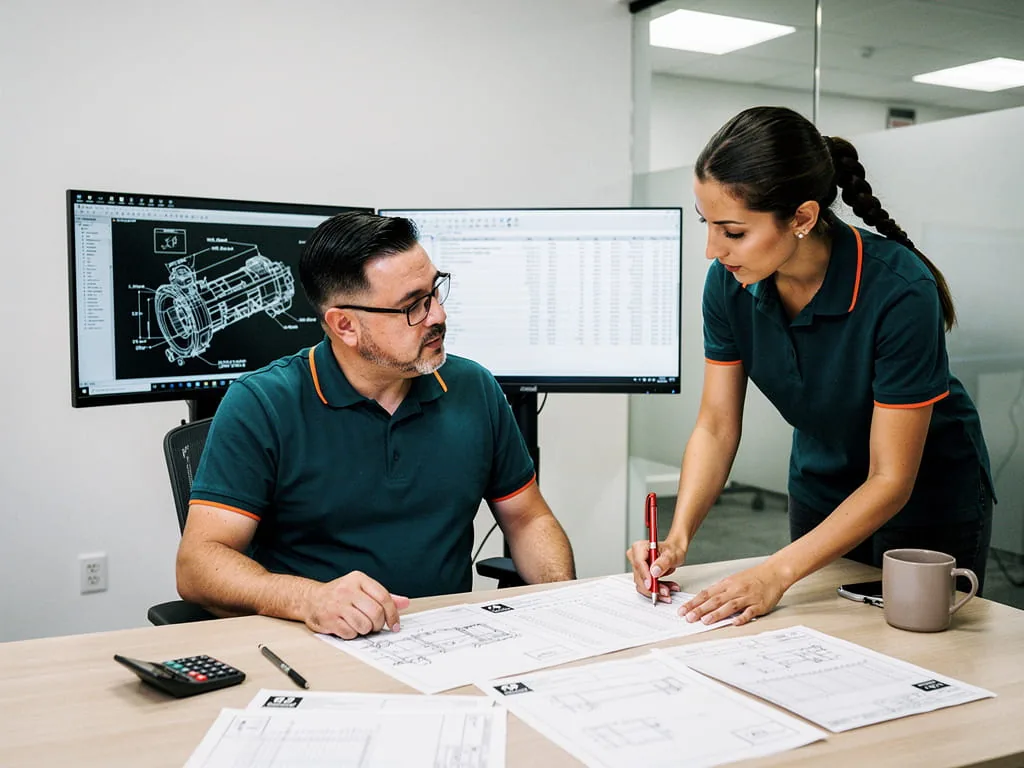
Every enclosure program starts with GPW's engineering team reviewing the customer's drawings, BOMs, and assembly specifications. The review identifies component placement, cable routing paths, thermal management requirements, and potential assembly sequence issues.
GPW's DFM review flags potential improvements — mounting sequence changes that reduce assembly time, cable routing adjustments that improve serviceability, or component placement modifications that improve thermal performance. Recommendations go back to the customer for approval before production begins.
A documented assembly plan with station-by-station work instructions, reviewed and approved by the customer.
Component Sourcing & Incoming Inspection
GPW supports three sourcing models: GPW procures through its own supplier network, GPW procures through the customer's approved vendor list (AVL), or the customer furnishes components directly. Many programs use a combination — GPW sources commodity items while the customer furnishes proprietary components.
Regardless of the sourcing model, every component passes through GPW's incoming inspection process. Critical components are verified against dimensional specifications, cosmetic standards, and the approved BOM revision.
Verified, conforming components staged and kitted for each production order.
Mechanical & Electrical Integration
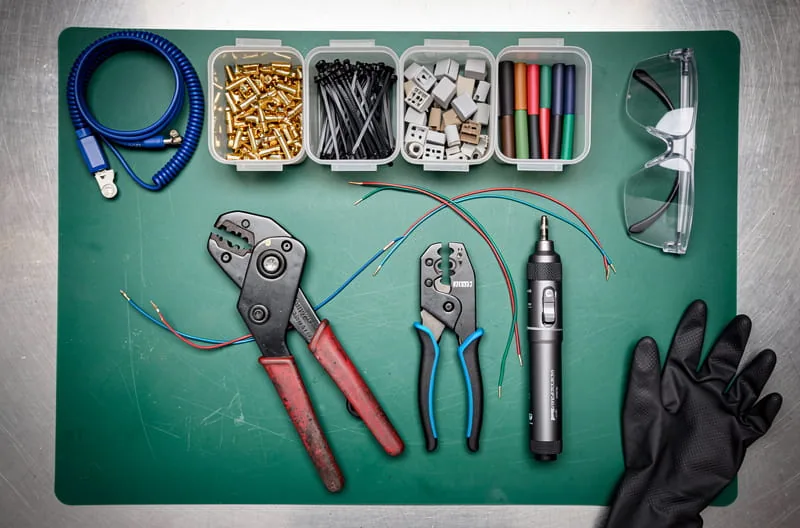
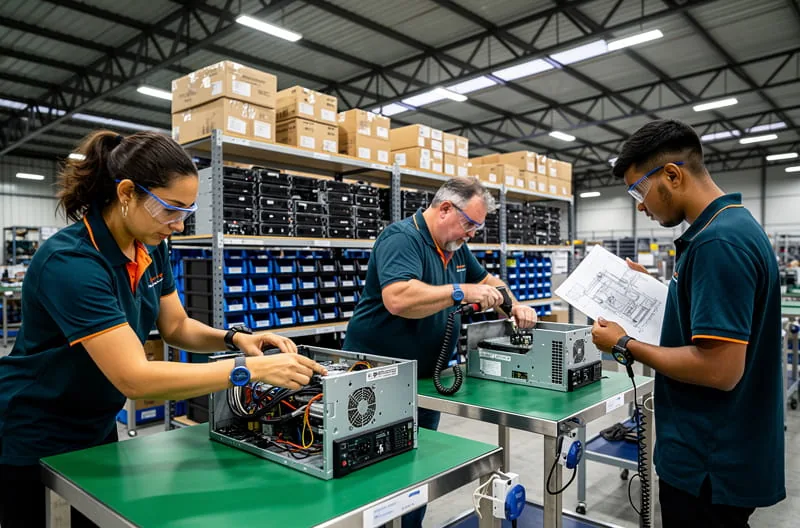
This is where the enclosure becomes a system. GPW's assembly technicians mount components to the enclosure structure — DIN rails, circuit breakers, power supplies, PCBAs, fan assemblies, and cable management hardware — following the documented work instructions and torque specifications.
Cable harnesses are routed through designated paths, terminated at connection points, and secured with appropriate strain relief. Power distribution wiring connects components according to the electrical schematic. For enclosures with thermal management requirements, GPW installs cooling fans, heat exchangers, or air conditioning units and verifies airflow paths.
Quality gates at critical stations verify component placement, fastener torque, cable routing compliance, and connector seating before the assembly advances.
A mechanically and electrically integrated enclosure with all components mounted, wired, and verified at in-process quality gates.
Functional Testing & Validation
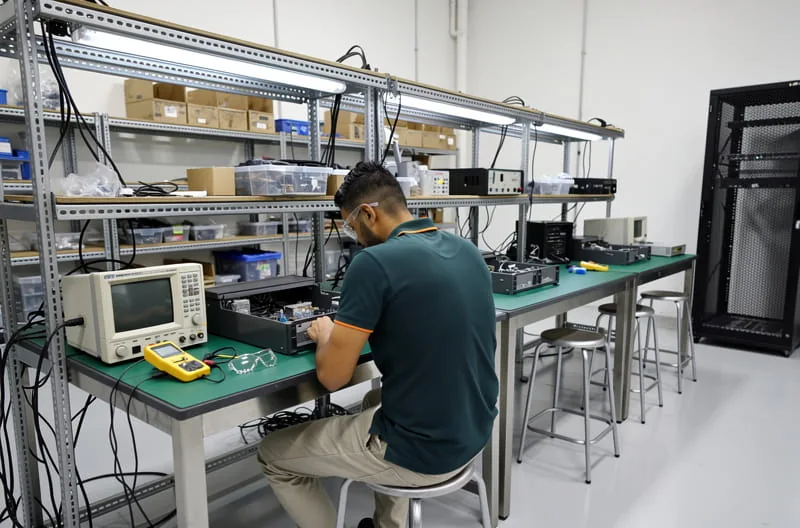
GPW tests every completed enclosure as a system — not just as a collection of individually tested components. The test protocol covers power-on sequencing and voltage verification at all distribution points, ground continuity testing, Hi-Pot safety testing where required, communication verification between PCBAs and subsystems, thermal performance measurement under operating conditions, and firmware version confirmation.
Test results are recorded digitally, tied to the unit's serial number, and archived as part of the production record. The test data package accompanies the product — available for customer review, regulatory filing, or warranty reference.
Every shipped enclosure meets the product specification across all mechanical, electrical, and functional parameters.
Labeling, Packaging & Shipment
Finished cabinets receive customer-specified labeling — serial number plates, warning labels, regulatory compliance marks, and branding elements. GPW photographs each completed cabinet before packaging, creating a visual record that documents the final assembly state.
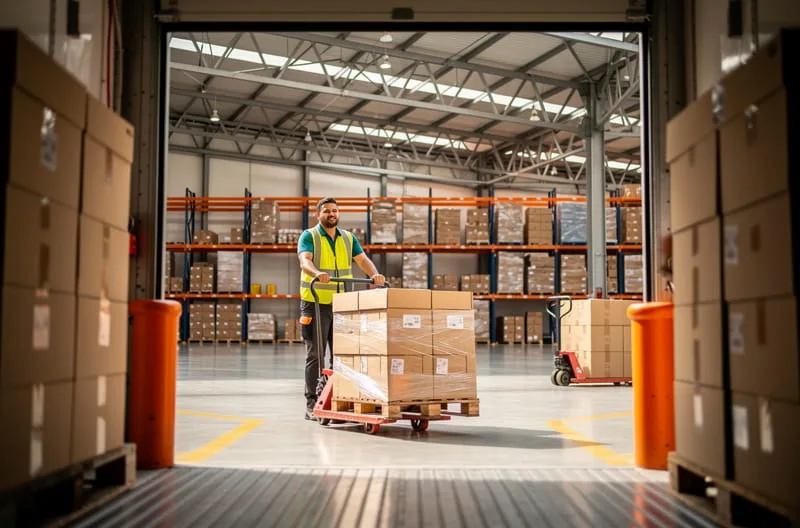
Packaging is designed for the product and the shipping method. Cabinets shipping via truck from Monterrey to U.S. destinations receive custom crating, foam bracing, and moisture barrier protection. Transit time to major U.S. distribution points — Dallas, Houston, Phoenix, Los Angeles — typically runs 1-3 days by ground freight. USMCA-compliant production means qualifying products enter the U.S. duty-free.
A tested, labeled, packaged cabinet ready for installation at the end customer's site.
Your Enclosure. Our Integration Expertise.
A Finished, Tested System.
Submit your enclosure drawings, BOM, and integration requirements. GPW's engineering team responds within 2 business days with a proposed assembly approach and preliminary timeline.
Request a Quote Request a QuoteIndustries That Rely on Enclosure & Cabinet Assembly
Enclosures require mechanical, electrical, and thermal integration skills in equal measure — and most contract manufacturers specialize in one discipline. GPW's assembly-first model handles all three under one roof.
The common thread across all verticals: enclosure assembly requires the same multi-discipline integration skills regardless of the industry. The documentation, testing, and compliance requirements change — but the core competency of turning an empty enclosure into a finished, tested system remains constant.
What Does GPW's Enclosure Assembly Capability Include?
- 19-inch rack cabinets (server, telecom, network)
- NEMA-rated enclosures (NEMA 1, 3R, 4, 4X, 12)
- IP-rated outdoor housings (IP54, IP65, IP66)
- Custom enclosures and housings per customer specification
- Wall-mount, floor-mount, and free-standing configurations
- Component mounting (DIN rail, panel, chassis, rack)
- Power distribution wiring and terminal block assembly
- Cable harness routing, termination, and strain relief
- Thermal management installation (fans, heat exchangers, AC units)
- Firmware loading and configuration
- Labeling, marking, and branding per customer specifications
- Functional testing (power-on, communication, I/O verification)
- Hi-Pot and ground continuity testing
- Thermal performance validation
- Visual inspection per documented workmanship standards
- Serialized test records with full traceability
GPW does not fabricate enclosures — GPW transforms them into finished systems. The distinction matters: assembly and integration require different skills, different equipment, and different quality systems than metal fabrication.
GPW vs. Typical Sheet Metal Shop
| Aspect | Typical Sheet Metal Shop | GPW (Assembly-First) |
|---|---|---|
| Core competency | Metal fabrication (bending, welding, painting) | Electromechanical integration and testing |
| Electrical integration | Basic component mounting; customer does wiring | Full wiring, cable routing, power distribution |
| Testing capability | Visual inspection only; no electrical testing | System-level functional testing, Hi-Pot, burn-in |
| Thermal management | Customer installs cooling after delivery | Designed during review, installed and validated |
| Documentation | Batch-level shipping records | Serialized records, traceability per unit |
| Sourcing flexibility | Customer provides all components | GPW-sourced, customer AVL, or customer-furnished |
Most sheet metal fabricators can mount a few components inside an enclosure. The difference is integration depth. GPW routes cables, terminates connectors, wires power distribution, installs thermal systems, loads firmware, and tests the complete unit — producing a finished product, not a partially assembled shell.
Enclosure &
Cabinet FAQ
No. GPW is an assembly and integration company, not a sheet metal fabricator. GPW works with the customer's preferred enclosure supplier or sources enclosures through its own supplier network. This separation keeps GPW focused on assembly expertise while the customer maintains control over enclosure sourcing and specifications.
GPW supports three models: GPW sources all components through its own supplier network, GPW procures through the customer's approved vendor list, or the customer furnishes components directly. Most programs use a combination — GPW sources commodity items while the customer furnishes proprietary components like custom PCBAs or branded panels.
Thermal management is addressed during the design review, not added after assembly. GPW's engineering team reviews the thermal requirements, recommends cooling solutions (forced air, heat exchangers, or AC units), plans airflow paths, and validates thermal performance during functional testing. The cooling system is installed as part of the standard assembly process.
GPW does not impose a fixed minimum order quantity. Programs range from prototype quantities of 5-10 units through production volumes of 500+ units per month. The economics improve at higher volumes, but GPW's production model handles low-volume, high-mix programs without requiring large minimum commitments.
GPW tests every enclosure as a complete system: power-on sequencing, voltage verification, ground continuity, Hi-Pot safety testing, communication between subsystems, I/O functional verification, and thermal performance measurement under operating conditions. Test protocols are product-specific, designed by GPW's engineering team, and approved by the customer before production begins.
Yes. GPW assembles NEMA-rated and IP-rated enclosures for outdoor and harsh-environment applications including temperature extremes, dust, humidity, and vibration. Assembly procedures include sealed cable entry installation, environmental gasket verification, and ingress protection testing. Energy and telecom programs regularly require outdoor-rated cabinet assembly.
A typical new program requires 4-6 weeks from design review through first article approval. This includes assembly planning, work instruction development, fixture design, test protocol creation, and first article build. Volume production begins after customer approval of the first article units.
Start Your Enclosure Assembly Program
Every enclosure program at GPW starts with a design review and assembly plan tailored to your product. Submit your drawings, BOM, and integration requirements. GPW's engineering team responds within 2 business days with a proposed assembly approach, sourcing plan, and preliminary timeline.
Request a Quote Request a QuoteNo minimum order quantities. From prototype builds through production-volume assembly. Engineered for your specifications.