Built Into Every Assembly, Not Bolted On at the End
Global Precision Works (GPW) integrates testing and inspection throughout the assembly process — from incoming component verification through system-level validation — ensuring every unit that leaves Monterrey meets your specifications.
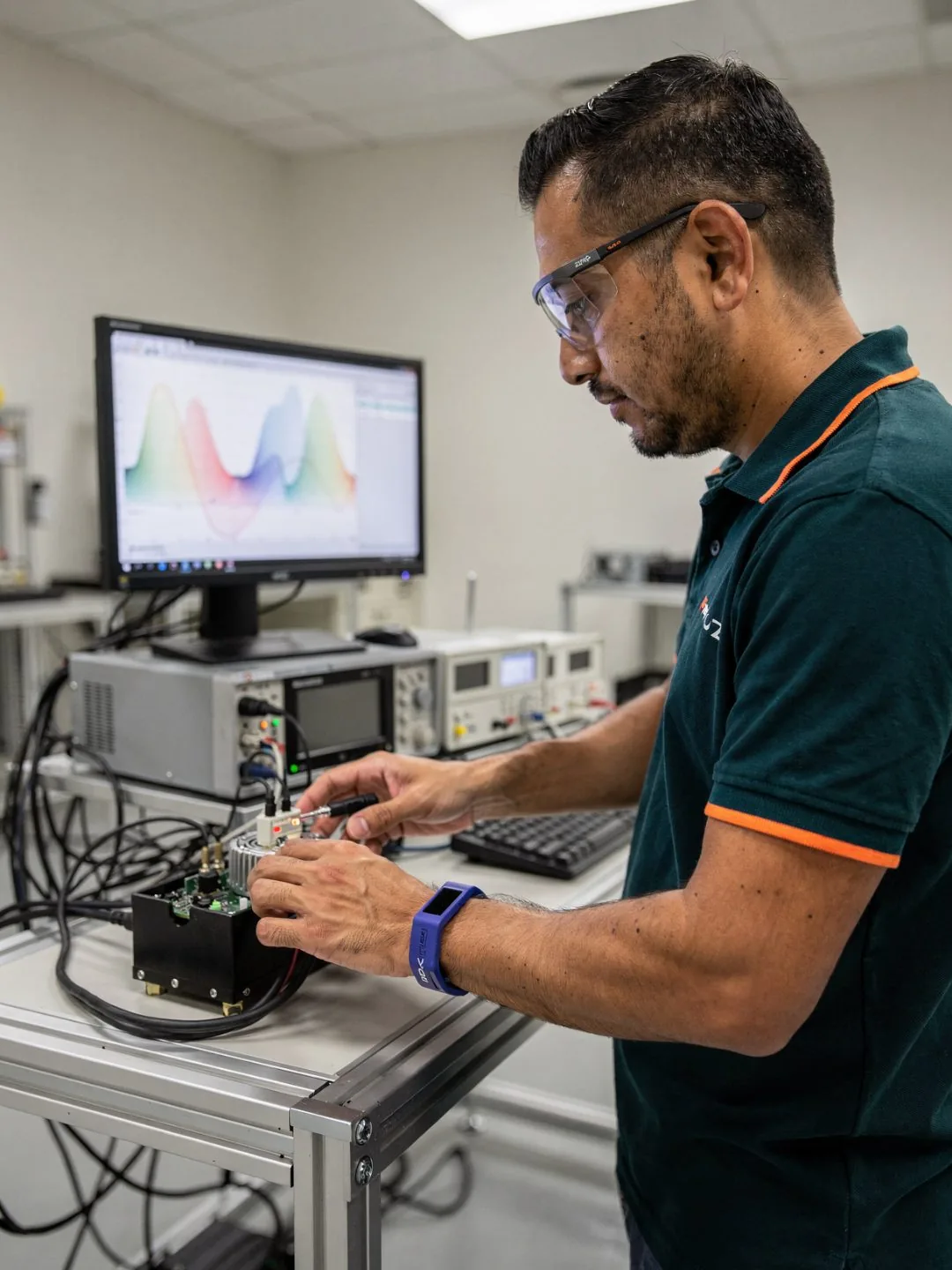
A defect caught at station 3 costs a fraction of a defect caught at end-of-line. A defect caught at end-of-line costs a fraction of a defect caught at your customer's dock. GPW's testing approach is built on this principle: quality gates are integrated at every stage of the assembly process, not added as a final checkpoint before shipping.
In-line quality gates at every assembly stage. Custom test fixtures designed in-house. Serialized test records for every unit. Defects caught early, before they become customer problems.
What Is Testing & Inspection in Electromechanical Assembly?
Testing and inspection in electromechanical assembly is the set of verification processes that confirm a product meets its design specifications, workmanship standards, and regulatory requirements. It covers the full scope from incoming material verification through final product validation — including visual inspection, dimensional measurement, electrical continuity, functional performance, safety compliance, and environmental stress testing.
A medical device OEM requires every assembled unit to pass a functional test, a Hi-Pot safety test at 1,500V, and a 24-hour burn-in at elevated temperature before shipment. GPW designs the test protocol, builds the test fixtures, trains operators on the procedures, and documents every result — creating a complete device history record that the OEM submits as part of their FDA filing.
Why This Matters for OEMs
GPW's production floor, workstation layout, and operator training are organized around in-line quality — not end-of-line sorting. Every assembly program has a documented test protocol designed for that specific product, with pass/fail criteria, test equipment assignments, and traceability requirements defined before the first unit is built. Your program manager works from the same timezone as your U.S. operations team — when a test result needs discussion, the conversation happens in real time.
Quality at Every Stage
GPW does not treat testing as a separate department that receives finished assemblies and decides which ones pass. Testing is embedded in the production process — designed by the same engineering team that creates the assembly work instructions.
Test Protocol Design
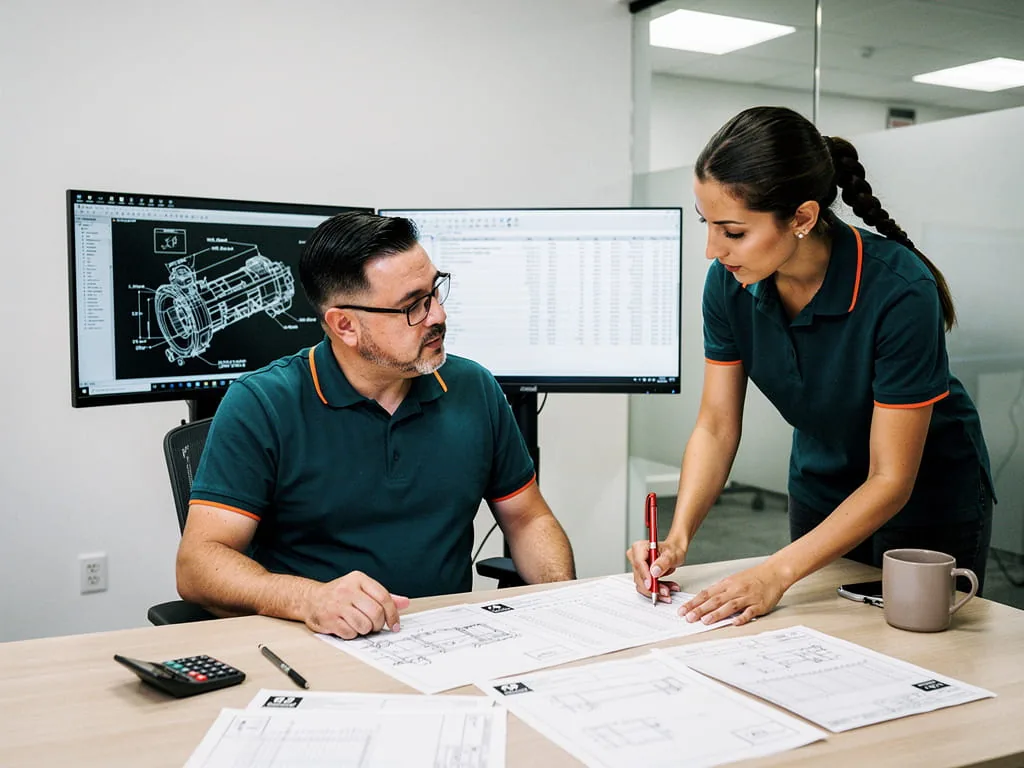
Every assembly program starts with a test plan. GPW's engineering team reviews the product requirements — electrical specifications, mechanical tolerances, performance criteria, safety standards, and regulatory requirements — and designs a test protocol specific to that product.
The protocol defines what gets tested at each station, the pass/fail criteria for every parameter, the test equipment and fixtures required, operator qualification requirements, and the documentation format. For products that require custom test fixtures — functional test beds, cable continuity jigs, or burn-in racks — GPW designs and builds them in-house.
A documented, customer-approved test protocol with station assignments, pass/fail criteria, and fixture specifications.
Incoming Inspection
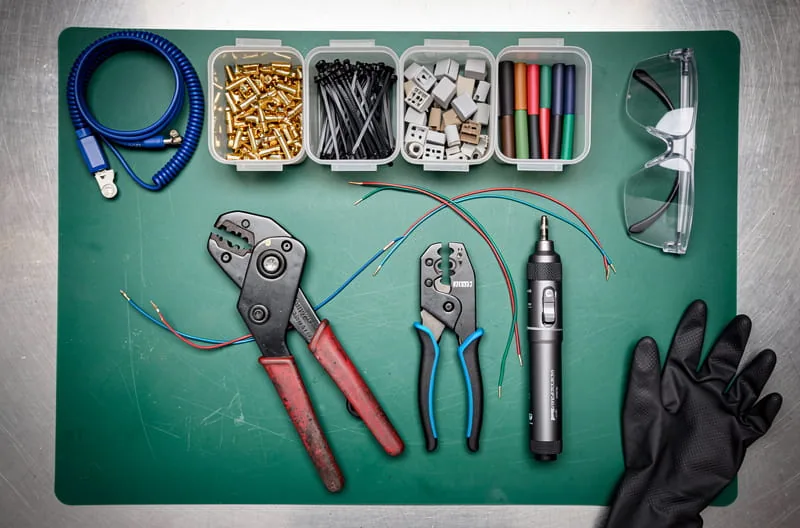
Quality starts at the receiving dock. GPW's incoming inspection process verifies every component before it reaches the assembly line. Critical components — PCBAs, connectors, cable assemblies, and mechanical parts — are inspected against the approved vendor list, dimensional specifications, and cosmetic standards.
The incoming inspection team uses calibrated measurement tools, visual inspection stations with magnification, and sample-based testing per the customer's acceptable quality level (AQL). Components that fail are quarantined, documented, and dispositioned — never mixed into production inventory.
Only verified, conforming components reach the production floor.
In-Process Quality Gates
As assemblies move through production, quality gates at critical stations catch defects before they propagate. These are planned inspection points positioned at stations where the highest-risk operations occur.
Typical in-process gates include visual inspection of solder joints and wire terminations against documented workmanship standards, torque verification on critical fasteners, continuity checks after cable routing and connector termination, and dimensional verification of mechanical assemblies against drawing tolerances.
Each quality gate produces a documented result tied to the unit's serial number. If a unit fails any gate, technicians route it to a dedicated rework station. Reworked units go through the failed gate again — they do not skip ahead.
Defects caught at the station where they occur, preventing costly rework downstream.
End-of-Line Functional Testing
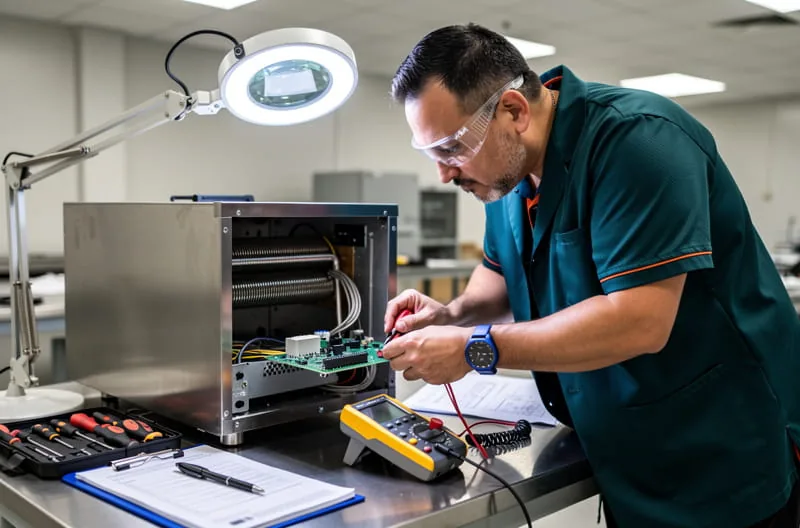
End-of-line testing validates the complete assembly as a functional product. This goes beyond component-level verification — it confirms that every subsystem works together as designed.
GPW's end-of-line test protocols typically cover power-on sequencing and voltage verification, communication between PCBAs and subsystems, input/output functional verification, firmware version confirmation, safety testing (Hi-Pot, ground continuity) where required, and performance measurement under operating conditions.
Test results are recorded digitally, tied to each unit's serial number, and archived as part of the production record. The test data package travels with the product — available for customer review, regulatory filing, or warranty reference.
Every unit that passes end-of-line testing meets the product specification across all functional parameters.
Burn-In & Environmental Stress Testing
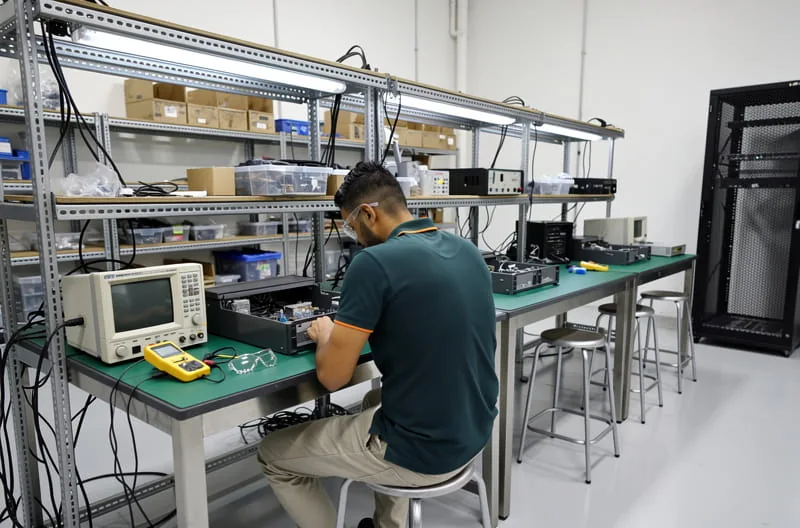
For products that require it, GPW runs burn-in testing to identify early-life failures before shipment. Burn-in subjects assembled units to extended operation under controlled conditions — elevated temperature, sustained electrical load, repeated power cycling — to accelerate infant mortality failures that would otherwise appear in the field.
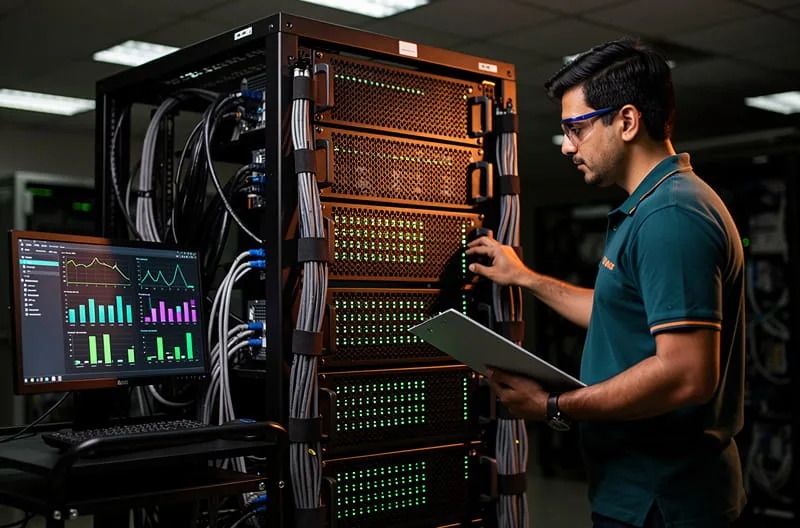
GPW configures burn-in parameters for each program: duration (typically 24-72 hours), temperature profile, load conditions, and monitoring intervals. Units run on dedicated burn-in racks with continuous monitoring. Environmental stress testing — thermal cycling, vibration, humidity exposure — is available for programs with specific environmental qualification requirements.
Products that survive burn-in have passed the infant mortality window, reducing field failure rates for your customers.
Your Specifications. Our Test Protocols.
Every Unit Verified.
Submit your product specifications and compliance requirements. GPW's engineering team responds within 2 business days with a proposed test approach and preliminary timeline.
Request a Quote Request a QuoteIndustries That Rely on Testing & Inspection
Testing requirements vary dramatically across industries. GPW designs test protocols that match each industry's standards — not a one-size-fits-all approach.
Every industry has different documentation requirements, test standards, and regulatory expectations. GPW's engineering team designs test protocols that satisfy the specific compliance framework for each vertical — not a generic quality checklist that covers the lowest common denominator.
What Does GPW's Testing & Inspection Capability Include?
- Functional testing (product-specific protocols, 20-100+ test points per unit)
- Burn-in testing (24-72 hours, configurable temperature and load profiles)
- Hi-Pot / high-potential voltage testing (up to 5,000V AC/DC)
- Ground continuity testing
- Cable and harness continuity testing
- Visual inspection against documented workmanship standards
- Dimensional inspection with calibrated equipment
- Environmental stress testing (thermal cycling, vibration, humidity)
- Serialized test records tied to unit serial numbers
- Digital test data archiving with customer-accessible reports
- Device history records (DHR) for medical programs
- Certificates of conformance for aerospace and defense
- First article inspection reports (FAIR)
- Statistical process control (SPC) data for high-volume programs
- Documented workmanship and inspection standards for electronic assemblies
- Documented workmanship and inspection standards for cable and wire harness
- Control plans, FMEAs, and documented work instructions for every program
- Audit-ready documentation aligned to the requirements each customer program defines
Testing at GPW is not a department — it is a discipline woven into every stage of the assembly process. Every quality gate is defined before the first unit enters the line, and every test result is tied to the unit's serial number.
GPW vs. Typical EMS Provider
| Aspect | Typical EMS Provider | GPW (Integrated Testing) |
|---|---|---|
| Test protocol design | Generic templates adapted from other programs | Product-specific, customer-approved before production |
| Quality gate placement | End-of-line only; defects propagate through process | In-line at critical stations throughout assembly |
| Fixture design | Off-the-shelf adapters; customer provides fixtures | Custom fixtures designed and built in-house |
| Failure analysis | Pass/fail sorting; failures returned to customer | Root cause analysis with corrective action feedback |
| Documentation | Batch-level test reports; limited per-unit data | Serialized records with full traceability per unit |
| Burn-in capability | Outsourced or not available | Dedicated racks with continuous monitoring |
The fundamental difference: GPW treats testing as a production discipline, not a quality department function. The engineers who design the assembly process design the test protocol. The quality gates are part of the production flow — positioned where they catch defects earliest. This integrated approach prevents more defects than any amount of end-of-line testing can catch after the fact.
Testing &
Inspection FAQ
GPW performs functional testing, burn-in testing, Hi-Pot and ground continuity testing, cable continuity testing, visual inspection against documented workmanship standards, dimensional inspection, and environmental stress testing. Each program receives a product-specific test protocol designed for its requirements — not a generic checklist.
Functional testing verifies that a product meets its design specifications at a point in time — power on, communication, performance parameters. Burn-in testing runs the product under sustained load and elevated temperature for 24-72 hours to identify early-life failures that functional testing alone cannot detect.
Yes. GPW designs and builds test fixtures in-house for each program: functional test beds, cable continuity jigs, burn-in racks, and inspection fixtures. The fixtures are validated during the first article build and maintained as production tooling throughout the program life cycle.
Technicians route failed units to a dedicated rework or diagnostic station. The team documents the failure, performs root cause analysis, and implements corrective action. Reworked units must pass the original test gate before continuing through production. Failure data feeds back into engineering for process improvement.
Every unit carries a serialized test record tied to its serial number. Depending on the program, documentation includes functional test results, burn-in logs, certificates of conformance, device history records (medical), first article inspection reports (aerospace), and SPC data (high-volume programs).
Every testing program follows documented workmanship and inspection standards, with first-article inspection, in-process checks, and full serialized traceability. We align to the quality and documentation requirements each customer program defines.
Yes. GPW's engineering team designs test protocols from scratch based on the product's electrical specifications, mechanical tolerances, performance criteria, and regulatory requirements. The protocol is reviewed and approved by the customer before production begins. Protocol development is included in the NPI timeline.
Define Your Testing Requirements
Every assembly program at GPW starts with a test protocol designed for your product. Submit your specifications, test requirements, and compliance standards. GPW's engineering team responds within 2 business days with a proposed test approach, fixture requirements, and preliminary timeline.
Request a Quote Request a QuoteNo minimum order quantities. From prototype validation through production-volume testing. Engineered for your compliance requirements.