Industrial Equipment Assembly — From Specification to Production-Ready
Global Precision Works (GPW) assembles industrial controls, machinery sub-assemblies, and complete equipment builds for U.S. OEMs — with the precision, documentation, and production consistency that industrial applications demand.
Industrial equipment is built to run for years. The motors, controls, sensors, and actuators inside that equipment need to be assembled with the same reliability standard the end product is expected to meet. That assembly work — mechanical integration, electrical wiring, cable routing, functional testing — is the bridge between individual components and a product your customer can install and operate.
GPW handles that bridge. Our Monterrey facility assembles industrial equipment and sub-assemblies across a range of complexity: from control panels with dozens of wired components to complete machinery builds integrating mechanical, electrical, and pneumatic systems. Every program follows a documented process, every unit passes through defined quality gates, and every assembly is traceable from incoming components through final test.
This is not a general-purpose shop that assembles whatever comes through the door. GPW is an assembly-first operation with dedicated production lines, configured workstations, and trained operators assigned to your program. Your equipment is built the same way every time — because the process is engineered, not improvised.
What Is Industrial Equipment Assembly?
Industrial equipment assembly is the process of integrating mechanical, electrical, and electromechanical components into finished industrial products or sub-assemblies — control panels, motor-driven machinery, instrumentation enclosures, operator interfaces, and system-level equipment builds. It takes individual parts — circuit boards, contactors, relays, wiring, switches, sensors, enclosures, and structural components — and builds them into a tested, documented, production-ready unit. For OEMs that design industrial equipment, contract assembly transfers the build process to a specialized partner so the OEM can focus on engineering and market development.
Industrial Equipment Is Getting More Complex — Assembly Needs to Keep Up
Industrial equipment has evolved well beyond simple mechanical builds. Today’s industrial products integrate programmable logic controllers, networked sensors, human-machine interfaces, variable frequency drives, and precision mechanical systems — all in a single assembly. The line between “industrial” and “electronic” has blurred, and the assembly partner who builds these products needs to be fluent in both disciplines.
For U.S. industrial OEMs, this shift creates a sourcing challenge. Domestic assembly costs continue to rise — skilled labor is scarce and expensive, and facility overhead cuts into margins on products that compete in price-sensitive markets. Offshore assembly introduces lead time delays, communication gaps, and quality variability that industrial customers do not tolerate.
Continue reading Show less
The result is a growing demand for nearshore assembly partners who can handle electromechanical complexity at competitive cost — without sacrificing the process discipline and documentation that industrial applications require. OEMs need a partner who understands that a control panel wired incorrectly does not just fail a test — it creates a safety risk at the installation site.
GPW was built for this type of work. Practical, process-driven, and focused on doing the same build right every time — whether the order is 50 units or 5,000.
What GPW Builds — Industrial Controls, Sub-Assemblies, and Complete Equipment
GPW assembles industrial equipment across a range of product types and complexity levels. Every program starts with a documented process plan and ends with a tested, traceable product ready to ship.
Control Panel and Enclosure Assembly
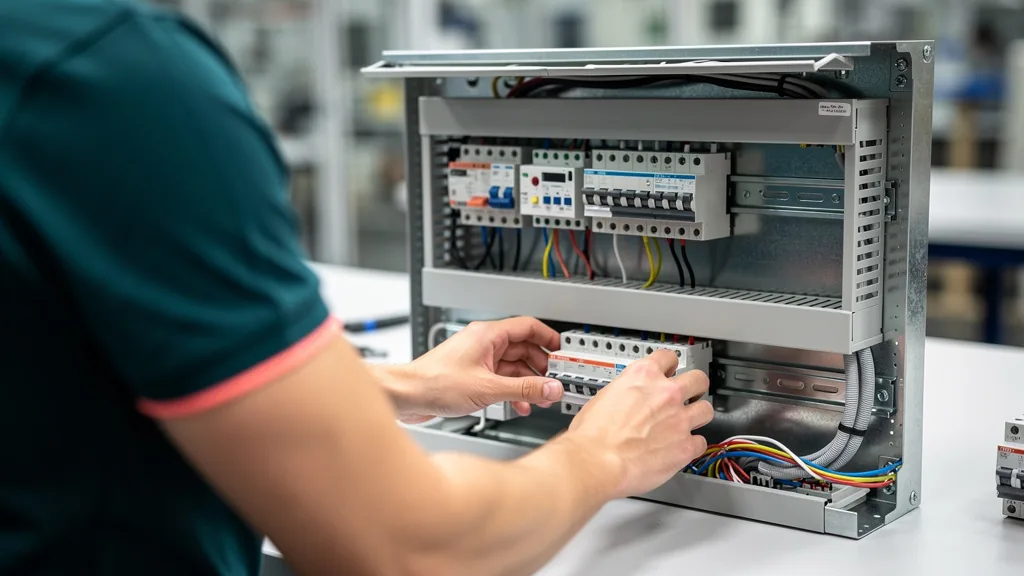
Control panels are among the most common industrial assembly programs at GPW. A typical control panel integrates a backplate with DIN rail-mounted components — PLCs, motor starters, contactors, relays, terminal blocks, circuit breakers, and power supplies — wired according to the OEM’s electrical schematic.
GPW’s control panel assembly process covers component mounting, wire routing and termination, labeling, point-to-point continuity verification, and functional testing against the customer’s test specification. Panels are assembled inside enclosures rated for the installation environment — NEMA-rated or IP-rated housings that GPW sources through the customer’s approved vendor list or procures directly.
For OEMs producing multiple panel variants, GPW manages configuration control across variants — ensuring the correct BOM, schematic revision, and test protocol are applied to each build without manual intervention or guesswork.
Machinery Sub-Assembly and Integration
Industrial machinery often ships as a system composed of multiple sub-assemblies — motor modules, drive systems, sensor arrays, operator stations, and structural frames. GPW assembles these sub-assemblies individually and integrates them into the final machine configuration when the program requires system-level assembly.
Mechanical integration includes torque-controlled fastening, alignment verification, and fit checks against customer tolerances. Electrical integration covers motor wiring, sensor connections, control cable routing, and power distribution. GPW’s technicians work from visual work instructions at configured workstations — each step documented, each connection verified.
Instrumentation and Sensor Integration
Industrial equipment increasingly depends on embedded sensors, transmitters, and instrumentation for process control and monitoring. GPW installs and validates instrumentation packages within larger assemblies — calibrating sensor connections, verifying signal integrity, and confirming that instrumentation outputs match the expected values defined in the customer’s test protocol.
Electromechanical Sub-Assemblies
Not every program requires a complete equipment build. GPW assembles electromechanical sub-assemblies — motor mounts with wiring harnesses, actuator assemblies with integrated controls, valve manifolds with pneumatic tubing, and bracket-mounted PCBAs with interconnect cables — that the OEM integrates into their final product at their own facility. These sub-assembly programs follow the same process discipline as full equipment builds: documented procedures, quality gates, and traceability at every step.
Machined Housings, Shafts, and Mounts — CNC Machining for Industrial Equipment
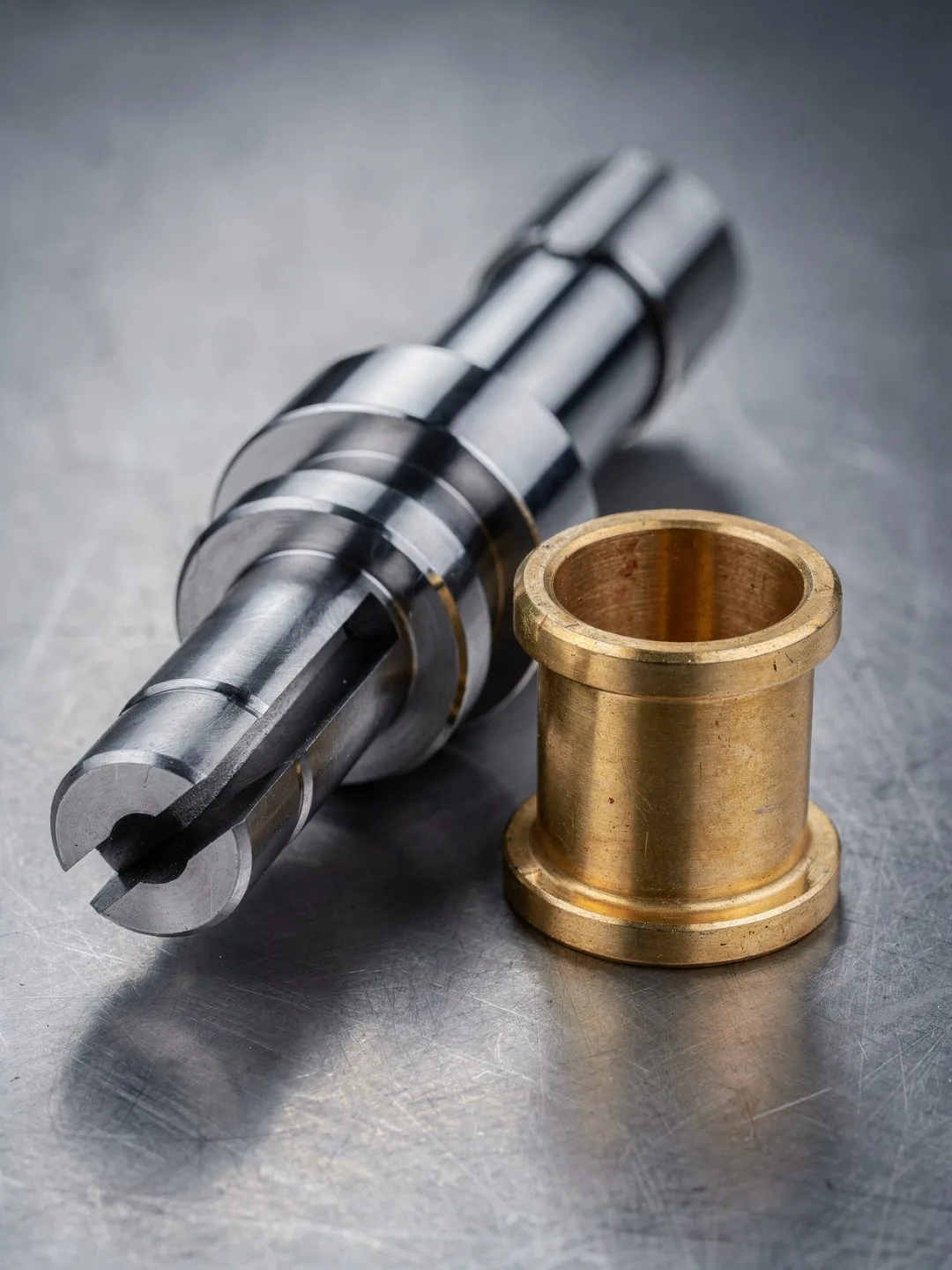
GPW coordinates precision machining for the same industrial equipment programs it assembles — through a vetted network of Monterrey machine shops, with GPW owning the DFM, quality governance, material sourcing, and on-time delivery. That keeps machined housings, shafts, mounts, and control-panel hardware reliable, predictable, and cost-effective. One contract, one accountable partner, and capacity that scales with your demand instead of stalling at a single-shop bottleneck.
Machining Processes for Industrial Equipment
The network covers the workhorse processes industrial equipment depends on: CNC turning for shafts, rollers, bushings, and spindles; 3- to 5-axis milling for housings, gear bodies, mounting blocks, and base plates; plus sheet-metal fabrication for guards and enclosures and surface finishing for corrosion and wear protection. GPW writes the process plan, assigns each part to the shop matched to its geometry and tolerance, and runs first-article approval before production — so a one-off replacement bushing and a 500-piece shaft run move through the same disciplined path.
A significant share of industrial machining starts without a drawing — a worn shaft, an obsolete bushing, a legacy part whose original supplier is gone. Where domestic shops decline one-offs and legacy work, GPW treats reverse engineering as standard service: the part is measured with calipers, CMM, or optical equipment, worn dimensions are reconstructed from the undamaged surfaces, and the resulting CAD model and drawing go to you for sign-off before any machining starts. You keep the CAD file and the drawing — the next reorder starts from a clean drawing, not a retraced photocopy.
Fixtures, Jigs & Inspection Gauges
Custom fixturing is one of the most common industrial project types GPW coordinates: weld fixtures, assembly jigs, inspection gauges, go/no-go fixtures, and locating tools designed around your specific process. The network treats these as full machining projects — DFM review, documented process plan, first-article check — not a secondary service squeezed between production runs. Tell GPW what the tool has to hold, locate, or verify, and the drawing, material selection, and build follow from there.
Materials the Network Machines for Industrial Equipment
GPW owns material selection and DFM behind the network, matching each part to its load, wear environment, and budget rather than assuming a default. Steel 4140 and 4340 carry high-load shafts and gears; aluminum 6061 lightens housings and pneumatic manifolds; stainless 304 and 316 handle washdown and chemical exposure; bronze 932 runs self-lubricating bushings and wear plates; and engineering plastics like UHMW, Delrin, and nylon take on conveyor guides and low-friction components. The choice is made during DFM — documented and traceable to the part, not left to chance on the shop floor.
The palette goes deeper than the headline grades. Steel 1018 covers general-purpose brackets, pins, spacers, and fixture bodies; A36 handles weldments, frames, and base plates. Aluminum 6061-T6 machines fast at a third the weight of steel — the default for lightweight housings, manifolds, and mounting plates. On the stainless side, 304 serves food-processing and outdoor equipment while 316 takes chemical and pharmaceutical exposure. Bronze 932 runs against hardened steel without lubrication for bushings and thrust washers. Among the plastics, UHMW-PE pairs the highest abrasion resistance with FDA approval for conveyor guides, wear strips, and chute liners; Delrin holds dimension with low friction for rollers, cams, and sprockets; and nylon 6/6 takes impact and abrasion on cable guides, wear pads, and snap-fit components.
Quality, Documentation & Accountability
Quality governance stays with GPW across every shop in the network. GPW defines the inspection plan, scales documentation to the job — from a Certificate of Conformance on a simple fixture to a full First Article Inspection with material certification and dimensional reports on critical production — and maintains traceability from raw stock to finished part. Procedures follow documented workmanship and inspection standards, with audit-ready documentation. You hold one supplier accountable for the result, not a list of shops.
Inspection matches the tolerance class: calipers, micrometers, and height gages for standard work; CMM for complex geometries and tight tolerances; optical measurement for precision features. Every part is inspected against the approved drawing and checked visually for burrs, surface defects, and finish before it ships. For recurring critical parts in production, GPW adds SPC on critical dimensions with control-plan documentation, material certs per heat lot, and process records — machine, operator, date. The documentation scope is defined upfront in plain language, and you are never charged for documentation you did not request.
GPW responds to every RFQ within 48–72 hours with an initial program assessment.
Get a Quote for Your Industrial Equipment Program Get a Quote for Your Industrial Equipment ProgramWhat a Typical Industrial Equipment Program Looks Like at GPW
Industrial equipment programs vary widely in scope, but they share a common pattern: a customer with a design that needs to be built consistently, on time, and to specification.
Industrial Control Panel Family
A U.S. OEM designs a family of 6 control panel variants for industrial automation applications. Each variant shares a common enclosure and backplate layout but differs in PLC model, I/O configuration, and motor starter sizing. Monthly volume runs 80-120 panels across all variants.
GPW manages the full program: variant-specific BOMs and work instructions, component kitting per configuration, DIN rail component mounting, wire routing and termination per the variant schematic, labeling, point-to-point continuity verification, and functional testing against variant-specific test protocols. Configuration control ensures that every panel is built to the correct revision without manual verification by the customer.
Motor-Driven Sub-Assembly for Material Handling
An OEM producing material handling equipment needs a conveyor drive module assembled as a sub-assembly: motor, gearbox, drive controller, wiring harness, and mounting bracket — delivered as a tested unit ready for installation into the OEM’s conveyor system. Initial volume is 200 units per month, scaling to 500+ units within 12 months as the OEM expands its product line.
GPW assembles the mechanical and electrical components, routes and terminates the wiring harness, performs functional testing (motor rotation direction, speed control response, overcurrent protection verification), and packages each unit for line-side delivery at the customer’s U.S. facility.
Complete Industrial Equipment Build
A water treatment equipment OEM needs a complete control and monitoring system assembled: a NEMA 4X stainless steel enclosure housing PLCs, VFDs, HMI touchscreen, power distribution, and sensor termination blocks — fully wired, tested, and configured with the customer’s application software. Each unit integrates over 300 individual wire terminations and requires point-to-point verification plus a full functional test sequence simulating field operating conditions.
GPW manages the program from enclosure prep through final test: mechanical assembly, component mounting, wire routing, termination, labeling, continuity verification, functional testing, firmware loading, and packaging for shipment to installation sites across the U.S.
Why Monterrey for Industrial Equipment Assembly — Cost, Reliability, and Proximity
Industrial equipment OEMs operate in cost-conscious markets. Margins matter. So does delivery reliability — because a late control panel can delay an entire machinery installation at the customer’s site.
Cost-Competitive Production
Assembly labor in Monterrey runs 40-60% below comparable U.S. operations. For labor-intensive industrial equipment programs — control panels with hundreds of wire terminations, machinery builds with multi-step mechanical integration — the labor cost advantage translates directly to margin improvement. USMCA-compliant assembly qualifies for preferential tariff treatment, keeping total landed cost well below domestic alternatives.
Delivery Reliability
Monterrey is two hours from Texas by road. Finished equipment reaches Texas distribution points in 1-2 days by truck — no ocean freight, no multi-week transit windows, no port congestion delays. When a customer needs equipment on-site for a scheduled installation, GPW delivers on the timeline that matters.
Same-Timezone Collaboration
GPW operates in the Central time zone — the same working hours as most U.S. industrial OEMs. Design change approvals, production status updates, and quality issue escalation happen in real time. No overnight email chains. No 12-hour response gaps. Your GPW program manager is available when you are.
Scalable Capacity
Industrial equipment demand is often seasonal or project-driven. GPW’s production model handles volume swings — from 50 units during low season to 500 during peak — without requiring the OEM to commit to fixed capacity reservations. Cross-trained operators and configurable workstations allow GPW to scale labor allocation based on program demand, not facility constraints.
Supply Chain Diversification
For OEMs currently dependent on a single assembly source — whether domestic or offshore — GPW provides a qualified second source in a USMCA-compliant facility. Split volume across two suppliers, maintain parallel production capability, and reduce the risk of single-point supply disruption affecting your ability to ship product.
For industrial equipment OEMs competing on cost and delivery, Monterrey is not a compromise — it is a structural advantage that improves margins and shortens the distance between your assembly line and your customer.
Quality Systems Built for Industrial Reliability
Industrial equipment operates in demanding environments — factory floors, outdoor installations, high-vibration applications, and temperature extremes. The assembly quality of that equipment determines whether it runs reliably for years or fails in the field. GPW’s quality system is designed to catch defects at the point of origin and prevent them from reaching the customer.
Process Documentation
Every assembly program operates under documented work instructions that define the build sequence, component placement, fastener torque specifications, and wire routing paths. Visual work instructions are displayed at each workstation. Operators follow the documented process — no improvisation, no undocumented shortcuts.
Electrical Verification
Every wired connection in every assembly is verified through point-to-point continuity checks. GPW does not rely on visual inspection alone to confirm electrical integrity. Continuity testing confirms that every wire is terminated at the correct point, every connection is secure, and no cross-wiring exists before the unit moves to functional testing.
Functional Testing
Assembled equipment undergoes functional testing against the customer’s test specification before it ships. GPW executes the test protocol defined during program onboarding — power-on verification, I/O checks, motor operation, sensor validation, HMI functionality, and any application-specific tests the customer requires.
Traceability
Every unit is traceable by serial number to its component lot numbers, assembly date, operator identification, test results, and any deviations documented during the build process. When a customer needs to trace a field issue back to a production run, the data is available — complete and auditable.
Quality & Documentation
- Documented workmanship and inspection standards for electronic and electromechanical assemblies
- Documented workmanship and inspection standards for cable and wire harness assemblies
- First-article inspection, in-process checks, and full serialized traceability
- Audit-ready documentation and material certifications, certificates of conformance (CoC), and dimensional inspection reports
- Customer-specific quality requirements via program-level quality plans
Industrial
Equipment FAQ
GPW assembles control panels, motor-driven machinery sub-assemblies, instrumentation enclosures, operator interface stations, and complete equipment builds that integrate mechanical, electrical, and pneumatic systems. Programs range from simple single-panel builds to multi-system equipment integrations with hundreds of wired connections and multiple sub-assembly stages.
Yes. GPW works from your electrical schematics, mechanical drawings, BOMs, and test specifications. During program onboarding, GPW's engineering team reviews your documentation, identifies any gaps or ambiguities, and develops internal work instructions and visual aids that translate your design intent into repeatable assembly steps.
GPW manages variant control through configuration-specific BOMs, work instructions, and test protocols. Each variant is assigned a unique configuration identifier that links the correct documentation set to the production order. Operators work from variant-specific instructions — reducing the risk of cross-configuration errors that occur when multiple variants share a single generic build document.
Program onboarding — including DFM review, process planning, fixture development, and first article builds — typically takes 3-6 weeks depending on product complexity. Production ramp follows first article approval. For programs with stable designs and available materials, GPW can compress onboarding to meet aggressive launch timelines.
GPW builds control panels to documented workmanship and inspection standards, with first-article inspection, in-process checks, point-to-point continuity verification, and full traceability. We align panel assembly, wire management practices, and documentation to the control-panel requirements each customer program defines, and we work with customers who maintain their own listings.
Every program operates under a documented process plan with defined quality gates at each assembly stage. Incoming materials are inspected against approved specifications. In-process checks verify mechanical assembly, electrical connections, and component placement before the unit advances to the next stage. Final testing follows the customer's test protocol, and every unit ships with a traceable quality record.
Yes. GPW's staffing and production model is designed for volume flexibility. Programs can scale from low-volume initial production to high-volume runs without requiring new capital investment or long-lead capacity commitments. GPW manages this through cross-trained operators, configurable workstations, and a capacity planning process that aligns labor allocation with customer demand forecasts.
Yes. One-off parts, small batches, and legacy replacements are core machining work — there is no minimum order quantity. That includes parts without a drawing: GPW measures the worn part, rebuilds the CAD model, and gets your sign-off before machining starts. Custom fixtures, jigs, and inspection gauges are among the most common industrial project types GPW coordinates through the network.
Standard lead time runs 2-4 weeks depending on material and complexity. When a line is down, GPW expedites: finished parts can move by same-day courier, and ground freight from Monterrey reaches Texas in 1-2 days and the Midwest in 3-4. For recurring parts, GPW sets up blanket POs with scheduled releases and safety stock held at GPW — so the next replacement ships from the shelf, not from a new quote cycle.
Capacity is defined by the partner shop assigned to your project — the network spans shops with different machine envelopes, and GPW matches each part to the shop equipped for its size, geometry, and tolerance. Send your dimensions with the RFQ and GPW confirms feasibility within 48–72 hours.
Ready to Move Your Industrial Equipment Assembly to Monterrey?
Whether you are launching a new industrial product, scaling an existing program, or looking for a second-source assembly partner that delivers consistent quality at lower cost — GPW is ready to build.
Our Monterrey facility is configured for industrial equipment assembly: control panels, machinery sub-assemblies, instrumentation integration, and complete equipment builds — under one roof, one quality system, and one program manager who works your hours.
The next step is a conversation. Send us your requirements and a program manager will respond within 48–72 hours with an initial assessment.
No commitment. No minimum order. Engineering-driven quoting.